
Aromatic isocyanates, such as toluene diisocyanate (TDI) and methylene diphenyl diisocyanate (MDI), are key ingredients in the production of polymers like polyurethanes. These chemicals are commonly used to create foams, adhesives, coatings, and elastomers, making them vital for industries like automotive refinishing, where high-performance coatings are required. However, exposure to these substances can pose significant health risks. Prolonged or high levels of exposure to TDI and MDI can cause respiratory sensitization, lung damage, and even fibrosis.
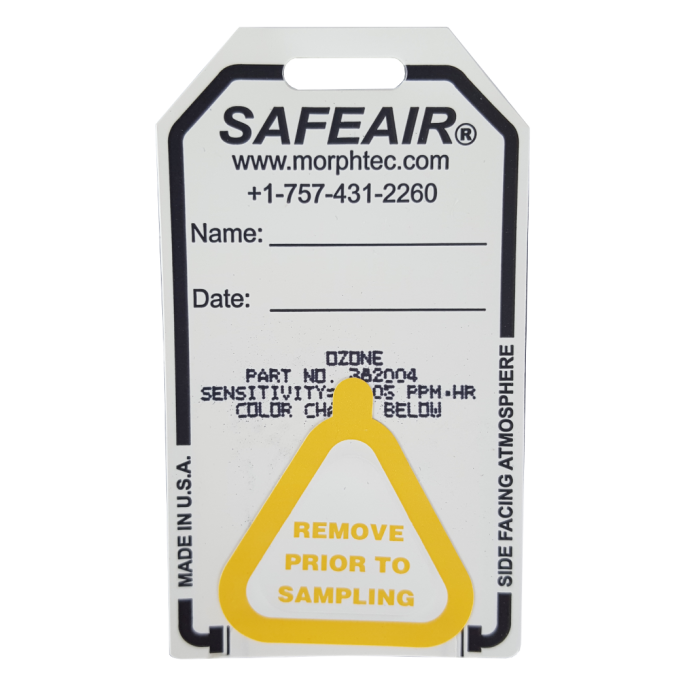
To ensure safe working conditions, it’s crucial to monitor exposure to TDI and MDI, and that’s where the SafeAir Aromatic Isocyanates Badge comes in. This chemical detection badge offers a simple, visual method for tracking the presence of these hazardous compounds in both personal and area environments.
How Does the SafeAir Badge Work?
The SafeAir Aromatic Isocyanates Badge is a passive monitoring device designed to detect TDI and MDI concentrations below permissible exposure limits. This badge uses a color-forming reaction to indicate the presence of isocyanates. When exposed to TDI or MDI, a clear exclamation mark appears within a triangle on the front of the badge, transitioning from off-white to red. This color change serves as an immediate alert to the user that dangerous isocyanate levels are present.
Key Features and Benefits
- Monitors TDI and MDI Exposure: The badge can be used for both personal and area monitoring for exposure durations ranging from 15 minutes to 24 hours.
- Visual Indicator: The presence of isocyanates triggers the formation of a visible red exclamation mark, providing a clear and immediate alert to potentially hazardous conditions.
- Flexible Sampling: For greater accuracy when measuring TDI exposure, the badge can be paired with the SafeAir TDI Color Comparator (Part Number: 383005), which helps determine exposure dose by comparing the badge color against a calibrated scale.
- Extended Monitoring: For exposures shorter than 30 minutes, it is recommended to let the exposed badge stand for at least 30 minutes before reading the results with the color comparator. This ensures the most accurate exposure dose reading.
- Not for Aerosols: It’s important to note that the SafeAir badge is not suitable for monitoring TDI or MDI in aerosol form.
Importance of Monitoring Isocyanates
Isocyanates, particularly TDI and MDI, can cause significant health issues when exposure levels exceed regulatory limits. The Occupational Safety and Health Administration (OSHA) and the National Institute for Occupational Safety and Health (NIOSH) have established exposure limits for TDI and MDI:
- TDI: OSHA and NIOSH set the exposure limit at 0.02 ppm (TWA), and NIOSH recommends a ceiling of 0.02 ppm.
- MDI: OSHA’s exposure limit is 0.02 ppm (ceiling), while NIOSH recommends a much lower limit of 0.005 ppm (TWA).
Even brief or repeated exposure to these chemicals can lead to sensitization, making it critical to monitor air quality in workspaces where isocyanates are present.
SafeAir Badge Operating Instructions
Using the SafeAir badge is straightforward. Here’s a step-by-step guide:
- Warming the Badge: First, remove the badge from its storage pouch and allow it to reach room temperature.
- Set Up for Monitoring:
- For personal monitoring, attach the badge near your breathing zone, such as on your collar, ensuring it faces the surrounding air.
- For area monitoring, mount the badge in a central location using a stand, with the front side exposed to the air.
- Color Change: When TDI or MDI is detected, a red exclamation mark will appear on the badge, indicating the presence of isocyanates.
- Exposure Dose: To calculate the average concentration, divide the exposure dose (in ppb∙hr) by the total exposure time in hours.
Storage and Shelf Life
To maintain the integrity of the SafeAir badge, it should be stored in its sealed bag in a refrigerator. When stored properly, the badge has a shelf life of one year.
Sampling Parameters and Limits
The SafeAir badge is designed for flexibility in a variety of working conditions:
- Minimum Detectable Limit: For an 8-hour exposure, the minimum detectable limit is 0.6 ppb for TDI and 0.4 ppb for MDI.
- Exposure Dose: For TDI, the badge’s detection range is from 5 ppb∙hr to 140 ppb∙hr. For MDI, it’s 3.5 ppb∙hr.
- Temperature and Humidity Range: The badge operates effectively in temperatures ranging from 60ºF to 91ºF and relative humidity between 11% and 87%.
- Sampling Time: Maximum recommended sampling time is 24 hours, with a minimum time of 15 minutes.
Conclusion
The SafeAir Aromatic Isocyanates Badge offers a reliable, user-friendly way to monitor hazardous isocyanates like TDI and MDI. With a simple color change from off-white to red, the badge provides a quick, visual alert to harmful exposure levels, helping protect workers and ensure a safe environment. Whether you need to monitor personal exposure or air quality in an industrial setting, this badge is an essential tool for detecting isocyanates and minimizing risks.
You can find this product here: https://www.gas-sensing.com/aromatic-isocyanates-safeair-badge-382001-50.html