
Other Names:
- Oxydol
- Perhydrol
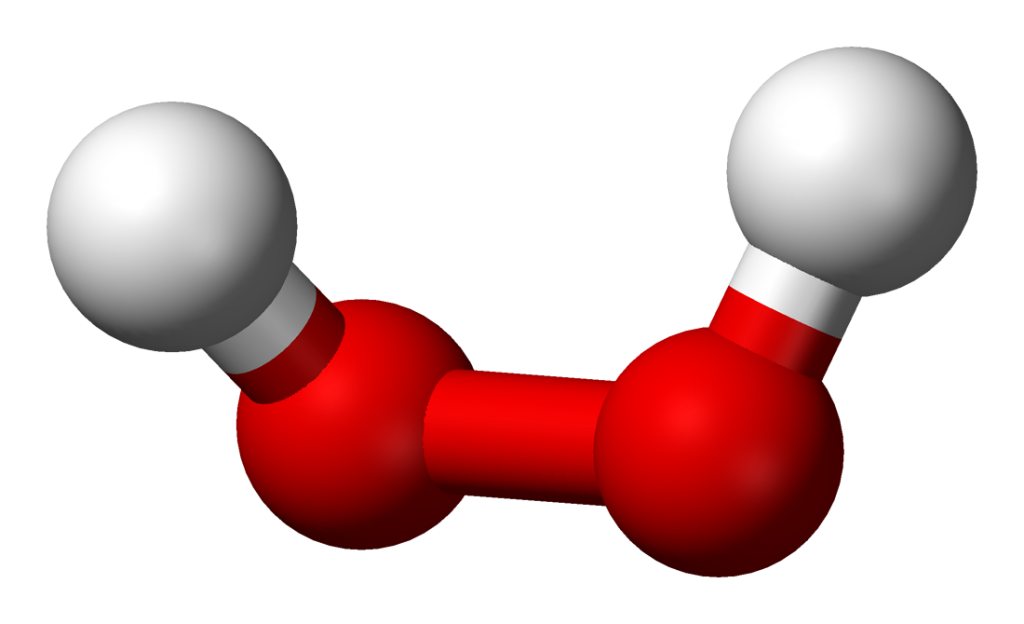
Chemical Formula: H₂O₂
CAS Number: 7722-84-1
Industry Uses: Anti-Infective, Ripening Agent, Bleach
Health Risks: Eye and Mucous Membrane Irritation, Dermal Burns
Vapor Pressure: 1.97 mmHg
Water Solubility: Miscible
Flammability: Not-Flammable
Odor: Pungent, Irritating
What is Hydrogen Peroxide?
Hydrogen Peroxide (H₂O₂) is a pale blue liquid that appears colorless in solution and is a weak acid known for its strong oxidizing properties. These properties make it a highly effective bleaching agent and a staple in a variety of industrial applications. In biological systems, hydrogen peroxide plays a role in host defense mechanisms and oxidative biosynthetic reactions, but it also contributes to processes like cancer development.
Despite its widespread use, hydrogen peroxide is inherently unstable, decomposing readily into oxygen and water with the release of heat. While non-flammable, it acts as a strong oxidizer, posing a risk of spontaneous combustion when in contact with organic materials.
Hydrogen Peroxide Exposure and Health Risks
Exposure to hydrogen peroxide presents several health risks, particularly at high concentrations. Its vapors can irritate the eyes and mucous membranes, while inhalation may lead to respiratory irritation. Prolonged or excessive exposure can result in severe dermal burns and eye damage. The gas may even explode if heated under pressure.
- Inhalation Risks: May cause respiratory irritation.
- Dermal Risks: Direct contact with concentrated hydrogen peroxide can result in burns.
- Ingestion Risks: Harmful if swallowed, hydrogen peroxide may cause internal damage.
Although it can be dangerous to humans at high concentrations, hydrogen peroxide is considered of low environmental concern.
Regulatory Limits
Both OSHA and NIOSH regulate exposure limits for hydrogen peroxide to protect workers from potential health hazards.
| Limit/Level | Type | Organization |
|---|---|---|
| 1 ppm | TWA (8 hours) | OSHA |
| 1 ppm | TWA (8 hours) | NIOSH |
These regulatory limits ensure that hydrogen peroxide exposure remains within safe levels during an 8-hour workday.
Measuring Hydrogen Peroxide
Hydrogen peroxide concentration can be measured in both air and water in parts per million (ppm). Monitoring these levels is critical for maintaining safety in workplaces where hydrogen peroxide is used extensively. Our range of hydrogen peroxide monitors and kits includes portable, fixed, and dissolved concentration measurement tools, many of which feature digital communication capabilities for easy monitoring and control.
You can find more information here: https://www.gas-sensing.com/information/hydrogen_peroxide