Introduction
Mercury is a toxic, silver-white metal commonly used in industrial and scientific applications. Despite its utility, mercury exposure poses significant health risks, including kidney damage, muscle tremors, and neurological effects. Monitoring mercury levels in the workplace or laboratory is critical to maintaining safety and ensuring compliance with occupational standards like OSHA and NIOSH, which set exposure limits at 0.05 mg/m³ (TWA).
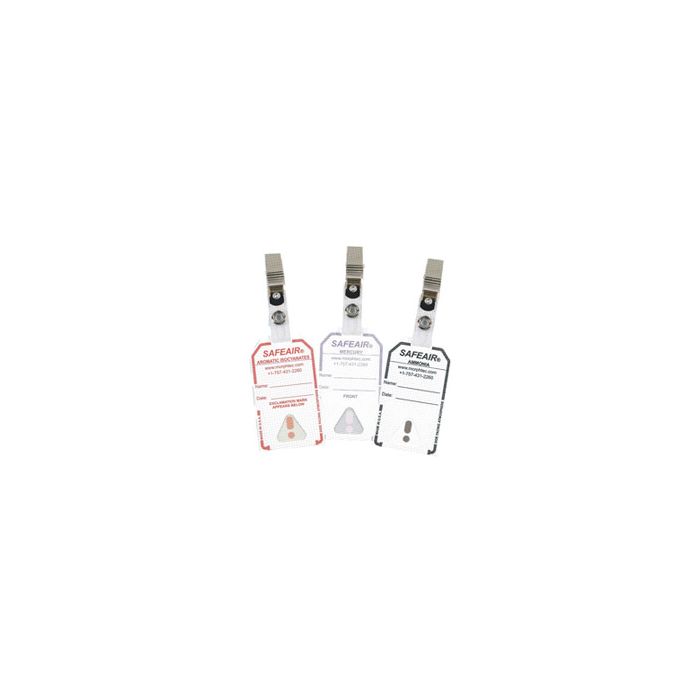
The ChromAir Mercury Badge offers a straightforward, reliable solution for monitoring mercury exposure, featuring a user-friendly color-change system and flexible monitoring durations.
Features and Benefits
The ChromAir Mercury Badge stands out for its simplicity and efficiency:
- Color-Based Detection: The badge changes from white to purple, visually indicating exposure levels without requiring additional instruments.
- Versatile Monitoring: Suitable for both personnel and area monitoring, with exposure times ranging from 15 minutes to 12 hours.
- Ease of Use: Lightweight and portable, making it ideal for use in various environments, from laboratories to industrial settings.
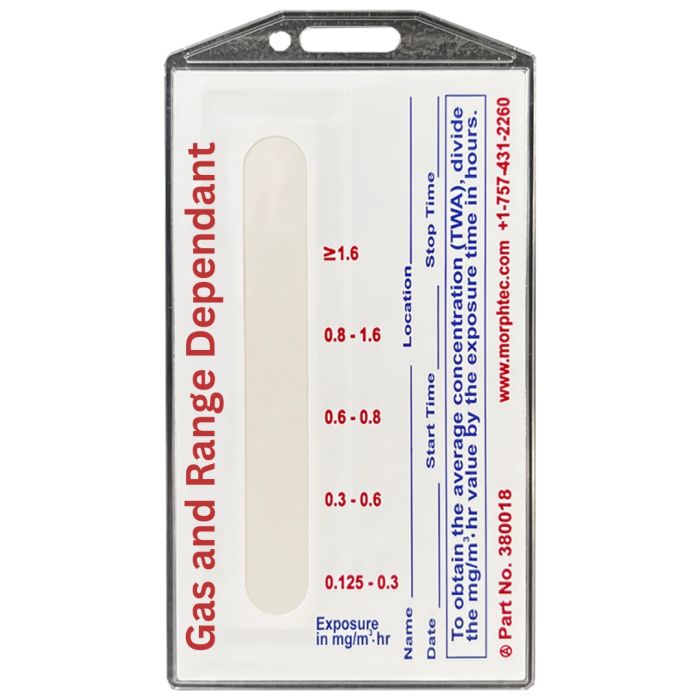
- Extended Range: When used with a color comparator, the badge offers enhanced resolution and accuracy, covering exposure ranges of 0.12 – 3.2 mg/m³·hr.
How It Works
The ChromAir badge uses patented autogenic exposimeter technology. It consists of six cells that measure mercury vapor exposure through a diffusion process. Mercury vapor reacts with an indicator layer on the badge, resulting in a distinct color change. The intensity of the color corresponds to the level of mercury exposure.
To read the badge:
- Observe the cell where the purple color reaches its threshold.
- Note the exposure dose (ppm·hr) and calculate the average concentration (ppm) by dividing the exposure dose by the monitoring time in hours.
Operating Instructions
Using the ChromAir Mercury Badge is straightforward:
- Preparation: Allow the badge to warm to room temperature if stored in a refrigerator.
- Labeling: Fill out the badge’s identification label with details like name, location, date, and start time.
- Activation: Remove the protective strip from the first cell before starting exposure.
- Placement: Attach the badge near the breathing zone for personnel monitoring or on a stand for area monitoring.
- Monitoring: Periodically check the back of the badge to observe color changes.
- Reading Results: Identify the highest cell showing a purple color and calculate the average mercury concentration as needed.
Storage and Shelf Life
To ensure optimal performance:
- Store the badges in their sealed bags under refrigeration.
- The refrigerated shelf life of the badge is one year.
Sampling Parameters
- Color Change: White to purple
- Exposure Range: 0.125 – 1.6 mg/m³·hr (standard); 0.12 – 3.2 mg/m³·hr (with color comparator)
- Environmental Tolerances:
- Humidity: 10% – 85%
- Temperature: 12°C – 39°C (54°F – 102°F)
- No effect from UV or visible light exposure
- Airflow Compatibility: Works effectively in face velocities of 5 – 150 cm/sec
Conclusion
The ChromAir Mercury Badge provides a practical, reliable, and cost-effective solution for monitoring mercury exposure. Its intuitive design, clear visual indicators, and robust sampling parameters make it an essential tool for maintaining safety in environments where mercury exposure is a concern.
With the ChromAir Mercury Badge, safety monitoring becomes simpler, ensuring compliance with health standards and protecting workers from the hazards of mercury exposure.
You can find this product here: https://www.gas-sensing.com/mercury-chromair-badge-380018-10.html