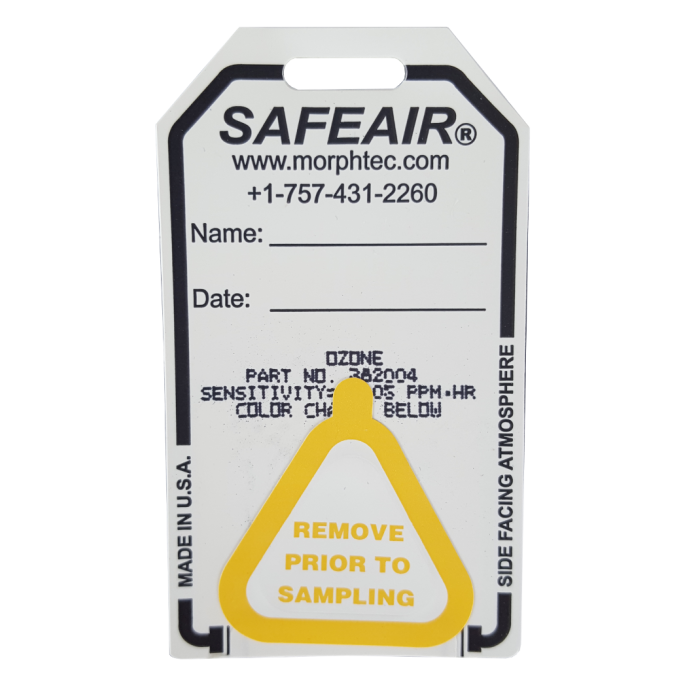
The SafeAir Chlorine Dioxide Badge (382003-50) offers a reliable, visual method for detecting harmful levels of chlorine and chlorine dioxide in the air. Designed for personal or area monitoring, this badge provides peace of mind for individuals working in environments where exposure to these chemicals is a concern.
Each box contains 50 badges, packaged as 10 badges per bag, making them ideal for team use in industries such as water purification, leather processing, and paper manufacturing.
Why Monitor Chlorine Dioxide?
Chlorine dioxide is a yellow to reddish-yellow gas with a pungent odor reminiscent of chlorine. Prolonged exposure can lead to severe irritation of the skin, eyes, and respiratory system, and may cause pulmonary edema. Both OSHA and NIOSH set a permissible exposure limit (TWA) of 0.1 ppm for chlorine dioxide, making accurate monitoring essential in workplaces where it is present.
Common Applications
Chlorine dioxide is widely used in:
- Water purification
- Leather tanning and detanning
- Bleaching cellulose, flour, leather, fats, and textiles
- Paper and pulp industries
Features of the SafeAir Badge
The SafeAir Chlorine & Chlorine Dioxide Badge is designed for simplicity and effectiveness:
- Visual Indication System
- The badge features a color-changing exclamation mark inside a triangle to signal the presence of chlorine or chlorine dioxide.
- Color change: Off-white to gray for chlorine and chlorine dioxide detection.
- Dual-Purpose Detection
- Detects both chlorine and chlorine dioxide at concentrations below the permissible exposure limit.
- The color change may occur on the front and/or back of the badge, depending on exposure levels.
- Flexible Monitoring Duration
- Usable for exposure times ranging from 15 minutes to 10 hours, making it versatile for short-term tasks or full work shifts.
- Easy-to-Use Design
- Lightweight and convenient for both personal and area monitoring.
- Attaches to a user’s collar for personal monitoring or mounted in a central area for broader assessments.
How It Works
The badge operates using a color-forming reaction between the contaminant and a flat indicator layer. When exposed to chlorine or chlorine dioxide, the reaction produces a visible exclamation mark that correlates with the exposure level.
To calculate the average concentration: Average Concentration (ppm)=Exposure Dose (ppm-hr)Exposure Time (hours)\text{Average Concentration (ppm)} = \frac{\text{Exposure Dose (ppm-hr)}}{\text{Exposure Time (hours)}}
Instructions for Use
- Preparation:
- Remove the pouch from refrigeration and allow it to warm to room temperature.
- Take the badge out of its sealed protective pouch.
- Activation:
- Remove the activation label before beginning monitoring.
- Placement:
- For personal monitoring: Attach the badge near the user’s breathing zone (e.g., the collar).
- For area monitoring: Mount the badge in a centralized location, ensuring the front side is exposed to the surrounding air.
- Detection:
- Observe the badge for the appearance of the exclamation mark. The mark will appear under the printed exposure dose (sensitivity).
Storage
To maintain accuracy and longevity:
- Store unused badges in their sealed bags.
- Keep badges refrigerated when not in use.
Why Choose SafeAir Badges?
The SafeAir Chlorine Dioxide Badge is a cost-effective, user-friendly solution for chemical hazard detection. Its lightweight design, visual alerts, and ability to calculate exposure make it an essential tool for industries requiring precise monitoring of chlorine and chlorine dioxide.
You can find this product here: https://www.gas-sensing.com/chlorine-dioxide-safeair-badge-382003-50.html