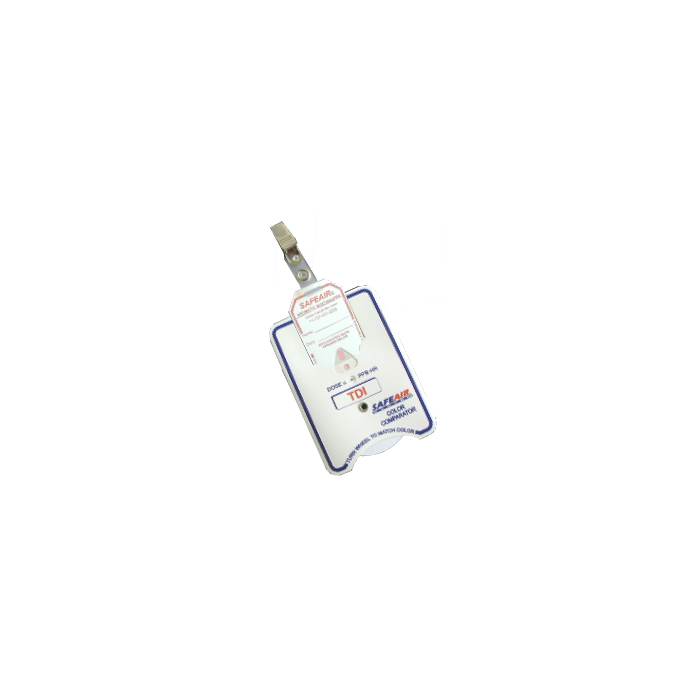
The SafeAir Color Comparator is a valuable tool for enhancing the accuracy and readability of the SafeAir Chlorine Detection Badge (Part #382009-50). Designed for professionals who need reliable, on-the-spot chlorine exposure monitoring, the color comparator helps quantify chlorine exposure by comparing the badge’s color change against a defined dose scale.
⚠️ Note: This product is the comparator only and does not include the badge. SafeAir Chlorine Badges must be purchased separately. Due to shipping regulations, these badges cannot be shipped internationally.
What Does the Color Comparator Do?
The SafeAir Chlorine badge provides a visual color change from yellow to orange as chlorine exposure increases. While this gives a clear indication of exposure, the color comparator allows you to match the badge’s color to specific ppm∙hr dose levels, offering better resolution and more precise exposure tracking.
Whether you’re monitoring personnel exposure or ambient air concentrations, the comparator provides a clearer understanding of the actual chlorine dose.
How the SafeAir Chlorine Badge Works
- Visual Alert: When chlorine is present, a colored exclamation mark appears within the triangular symbol on the badge.
- Color Change: The badge shifts color from yellow to orange depending on the exposure level.
- Exposure Range: Effective for monitoring chlorine exposure over time periods ranging from 15 minutes to 48 hours.
- Quantifying Exposure: Use the color comparator to correlate the observed color change with an estimated exposure dose.
Chlorine Exposure and Health
Chlorine is a highly reactive gas with a greenish-yellow color and a sharp, pungent odor. It is widely used in water disinfection, chemical manufacturing, and industrial processes.
- OSHA PEL (Permissible Exposure Limit): 1 ppm (ceiling)
- NIOSH REL (Recommended Exposure Limit): 0.5 ppm (ceiling)
- Hazards: Even low-level exposures can irritate the eyes, nose, and respiratory system. Exposure to concentrations over 1000 ppm can be fatal within a few breaths.
The SafeAir badge helps ensure compliance and protects personnel from dangerous chlorine levels—especially in confined or industrial environments.
Using the SafeAir Chlorine Badge with the Comparator
Step-by-Step Instructions:
- Storage: Keep the badge sealed and refrigerated until use.
- Preparation: Let the badge warm to room temperature before opening.
- Deployment:
- For personal monitoring: Clip to the collar or breathing zone.
- For area monitoring: Mount in a central location with good airflow.
- Detection:
- A visible exclamation mark will appear if chlorine is present.
- Use the color comparator to determine the approximate ppm∙hr dose.
- Average Concentration Calculation:
To find average ppm over time, divide the dose (ppm∙hr) by the exposure time (in hours).
Ideal for Use In:
- Water treatment plants
- Pulp and paper mills
- Chemical manufacturing
- Industrial hygiene programs
- Emergency response teams
Why Use the Color Comparator?
- Improved Accuracy: Provides a more exact estimate of chlorine exposure.
- Quick Assessment: Offers instant visual comparison—no lab equipment needed.
- Portable: Easy to carry and use in the field or facility.
- Essential for Documentation: Helps support exposure records and compliance documentation.
Final Notes
- Always store the badge in the refrigerator until it is ready for use.
- The comparator is not a standalone monitor—it must be used with the SafeAir Chlorine badge.
- If you are unsure whether this system fits your needs, contact our technical support team for help selecting the right chemical monitoring solution.
You can find this product here: https://www.gas-sensing.com/chlorine-safeair-color-comparator-383010.html