Acetylene is a widely used industrial gas with unique properties that make it indispensable – and potentially hazardous if not monitored correctly. At Gas Sensing, we want to help you understand what acetylene is, how it’s used, and why accurate gas detection is essential for safety and compliance.


What Is Acetylene?
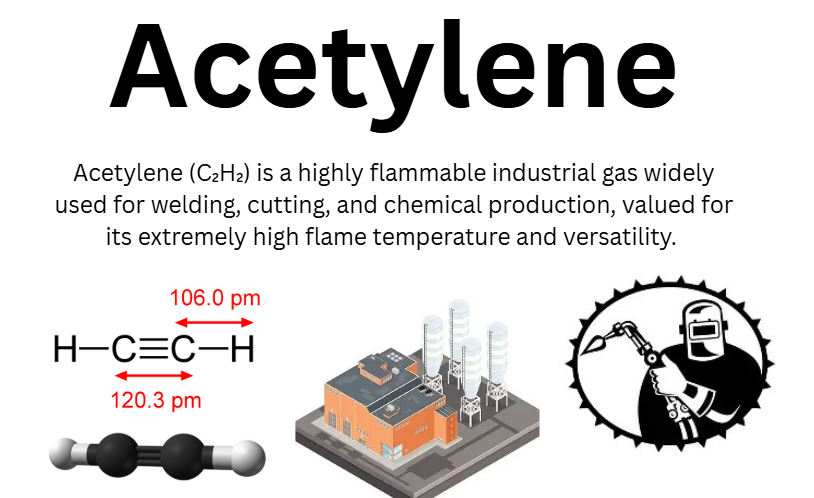
Acetylene, also known by its chemical name ethyne (chemical formula C₂H₂), is a colorless gas most commonly recognized for its use as a high-temperature fuel source. It has a faint garlic-like odor in commercial form due to trace impurities.
While pure acetylene is unstable, it’s typically handled dissolved in a solvent in pressurized cylinders to improve safety during storage and transport.
Key Uses of Acetylene
Acetylene’s most prominent roles include:
- Fuel for welding and cutting – acetylene’s flame temperature can reach extremely high levels, making it ideal for oxy-fuel flame applications.
- Industrial processes – used as a building block in the production of chemicals and materials.
- Portable lighting (historically) – it was once commonly used in carbide lamps where electric light wasn’t available.
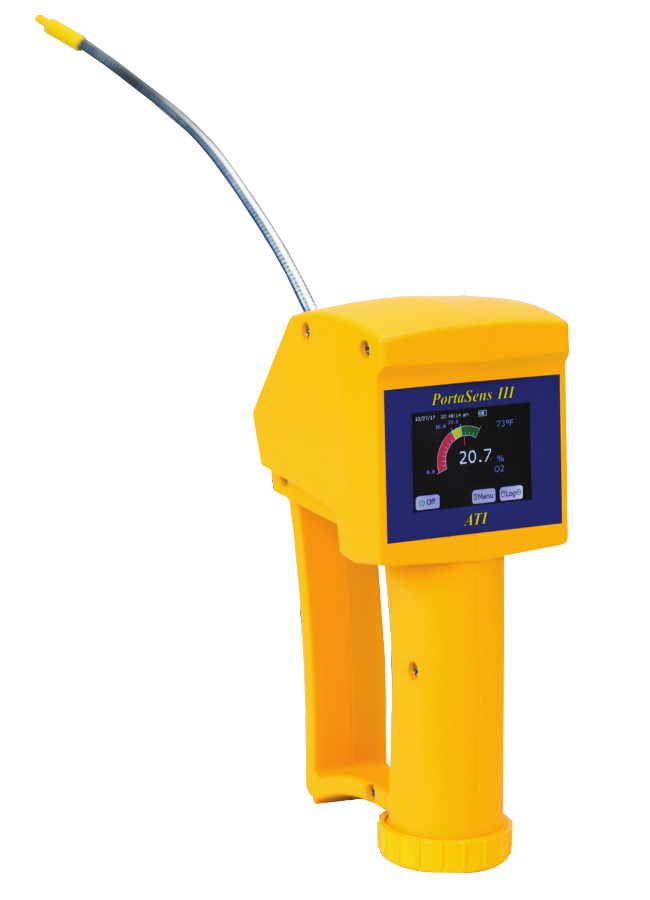
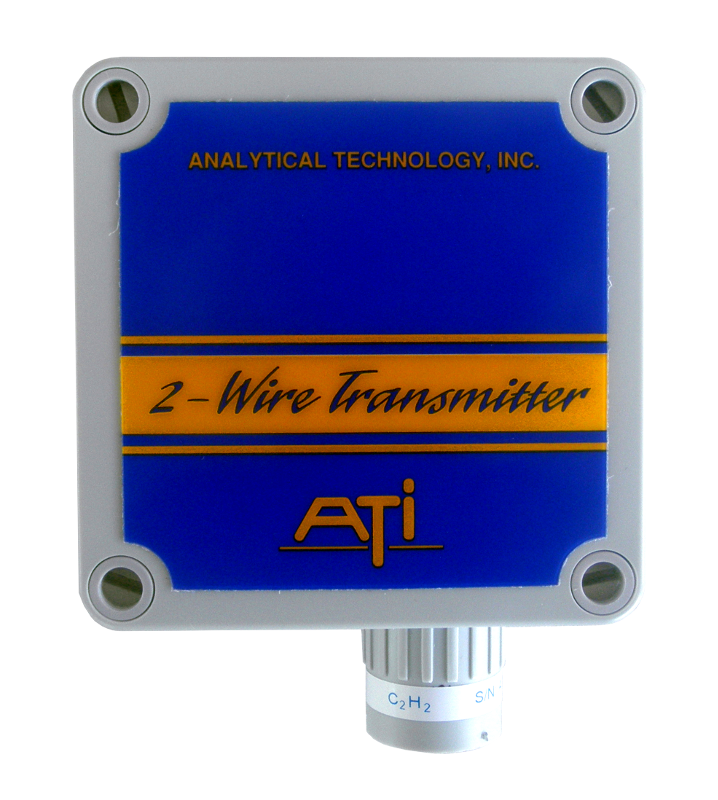
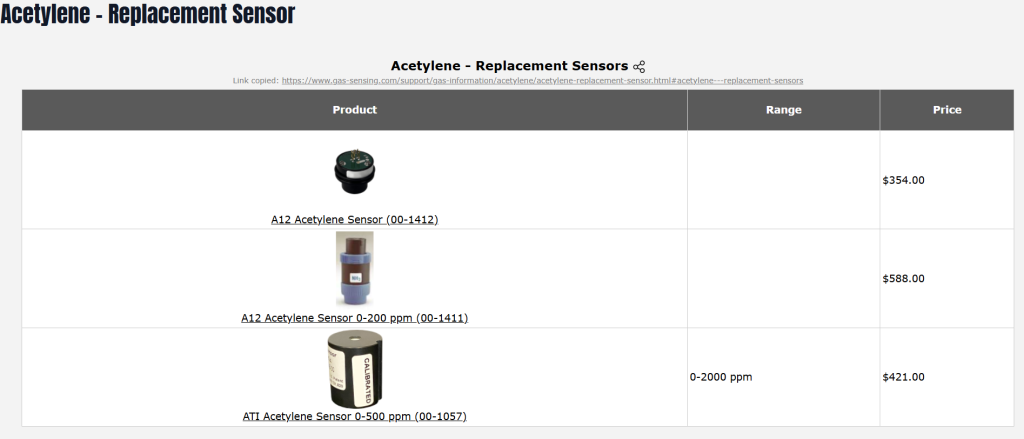
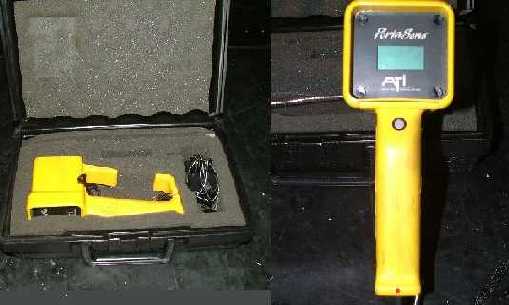
Whether you need fixed mount detectors, handheld monitors, or replacement sensor heads for acetylene, we offer a full range of solutions tailored to your application needs.
Hazards and Safety Concerns
Acetylene’s greatest risk comes from its high flammability and potential for explosion. Even at relatively low concentrations, acetylene can ignite or explode if it encounters heat, sparks, or other ignition sources.
Health risks are typically tied to exposure scenarios involving elevated concentrations or impurities:
- Inhalation may cause headache, dizziness, or loss of consciousness in extreme cases.
- Contact with expanding gas can cause burns or frostbite.
Because acetylene is so reactive, reliable gas detection and monitoring play a vital role in managing risks and maintaining safe environments.
Why Monitor Acetylene?
Proper acetylene monitoring helps protect people and facilities in environments where this gas is present. Our sensors (available in both portable and fixed configurations) are designed to detect acetylene accurately so you can act quickly in the event of a leak or hazardous buildup.
Plus, routine sensor calibration ensures ongoing performance and compliance with safety standards.