Maintaining the accuracy and reliability of your gas monitoring equipment is crucial for safety, especially when dealing with hazardous gases like ammonia. A bump test is a quick, simple way to verify that your gas monitor is functioning correctly. One of the most efficient tools for performing a bump test on ammonia gas detectors is the Puffer, a portable instrument designed for on-site verification.
What is the Puffer?
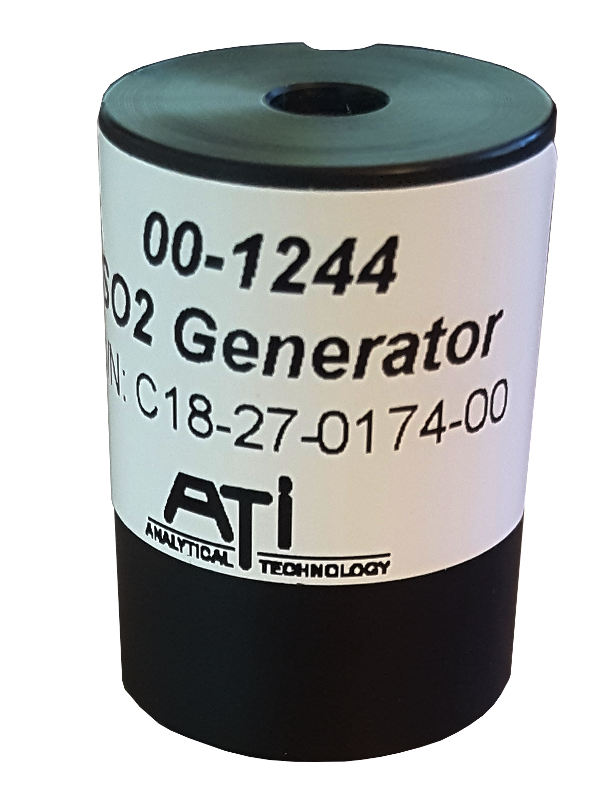
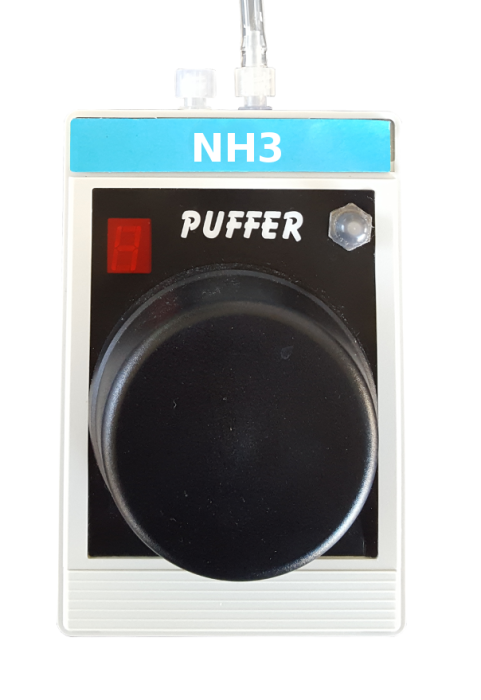
The Puffer is a compact, portable device equipped with a small ammonia gas generator. It allows you to produce a controlled amount of sample gas and deliver it directly to your gas monitor. This ensures your monitor’s sensors are responsive and accurately detecting ammonia gas, providing peace of mind and ensuring safety in environments where ammonia is present.
How to Use the Puffer
Using the Puffer is straightforward, and it involves just a few simple steps:
Activate the Puffer:
- Push and hold the activation switch on the Puffer until the % life indicator flashes three times.
Prepare the Sample Gas:
- Release the switch and wait for the % life indicator to stop flashing, which takes about 45 seconds. This indicates that the sample gas is ready for use.
Dispense the Gas:
- Once the indicator stops flashing, you have two options to deliver the ammonia gas to your monitor: a. Manual Propulsion:
- Push the black rubber bladder on the front of the Puffer. This action propels the gas through the tube towards the sensor that needs to be tested.
b. Internal Pump Utilization:
- For gas monitors equipped with an internal pump, you can remove the plug next to the outlet tube. Connect the sample wand to the exposed port, and the gas monitor’s pump will draw air from the Puffer without needing to push the rubber bladder.
- Push the black rubber bladder on the front of the Puffer. This action propels the gas through the tube towards the sensor that needs to be tested.
Why Regular Bump Tests are Important
Performing regular bump tests with tools like the Puffer is essential for several reasons:
- Safety: Ensures that the gas monitor will respond appropriately to ammonia gas, preventing potential exposure to hazardous levels.
- Compliance: Meets industry standards and regulatory requirements for equipment testing and calibration.
- Reliability: Identifies any faults in the gas monitor’s sensors, prompting timely maintenance or replacement.
- Peace of Mind: Provides confidence that the gas monitoring system is operational and ready to protect you and your team.
Conclusion
The Puffer is an invaluable tool for anyone relying on ammonia gas monitors. Its ease of use and effectiveness in producing a small, controlled sample of ammonia gas make it perfect for on-site bump tests. By incorporating regular bump tests into your maintenance routine, you can ensure the continuous reliability and accuracy of your gas monitoring equipment, safeguarding your work environment against the dangers of ammonia gas.
Stay safe and ensure your gas monitors are always in top working condition with the Puffer.
You can find this product here: https://www.gas-sensing.com/ammonia-puffer.html