
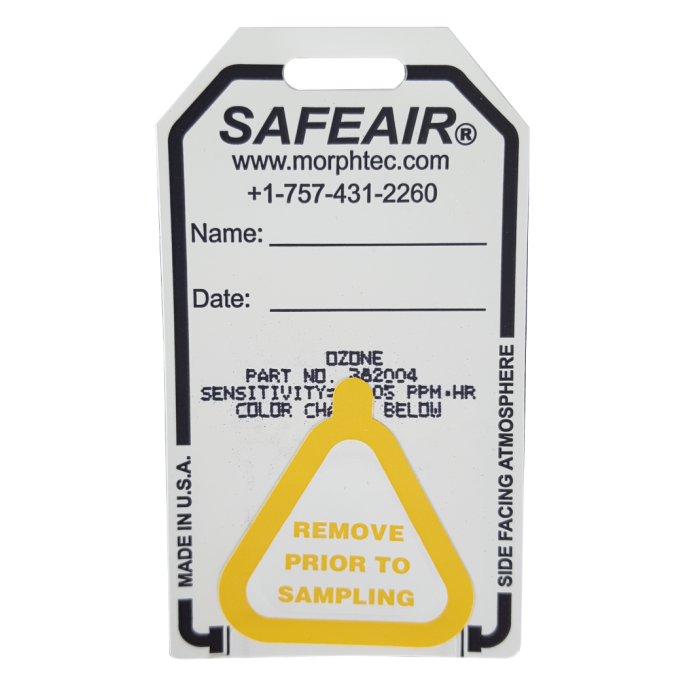
Exposure to aromatic isocyanates—specifically toluene diisocyanate (TDI) and methylene diphenyl diisocyanate (MDI)—poses significant health risks in industrial and manufacturing settings. Designed to offer clear, immediate visual detection of these hazardous compounds, the SafeAir Aromatic Isocyanates Badge (382001-50) provides a simple, reliable tool for both personal and area monitoring.
What Is the SafeAir Aromatic Isocyanates Badge?
The SafeAir badge is a colorimetric chemical detection device that responds to the presence of TDI and MDI by forming a red exclamation mark inside a triangle on the badge’s front surface. This visual signal indicates that a potentially harmful level of isocyanates is present in the atmosphere.
Ideal for exposure times ranging from 15 minutes to 24 hours, the badge offers flexible use across a variety of applications, from short-term spot checks to full-shift exposure assessments.
Applications of Aromatic Isocyanates
Aromatic isocyanates such as TDI and MDI are widely used in the production of:
- Polyurethanes for rigid and flexible foams
- High-performance coatings, particularly in automotive refinishing
- Adhesives, sealants, and elastomers
Due to their widespread use, workers in manufacturing, coatings, and chemical production facilities are at risk of exposure.
Health Risks of TDI and MDI Exposure
Both TDI and MDI are potent respiratory sensitizers. Repeated low-level exposures or a single high-level exposure can lead to sensitization, resulting in asthma-like symptoms upon subsequent exposures—even at very low concentrations.
Chronic overexposure has been linked to lung fibrosis and other forms of irreversible lung damage.
Regulatory exposure limits:
- TDI (OSHA & NIOSH TWA): 0.02 ppm
- MDI (OSHA Ceiling): 0.02 ppm
- MDI (NIOSH TWA): 0.005 ppm
How It Works: Principle of Operation
The SafeAir badge features a flat chemical indicator layer that reacts with airborne TDI and/or MDI. This interaction triggers a distinct color change—from off-white to red—in the shape of an exclamation mark. This easily identifiable symbol provides a clear alert to personnel that exposure has occurred.
For higher resolution TDI monitoring, the badge can be paired with the SafeAir TDI Color Comparator (Part No. 383005). When used this way, wait at least 30 minutes after badge exposure before reading the dose for accurate results.
Note: The badge is not recommended for use in detecting aerosolized TDI or MDI.
How to Use the SafeAir Badge
- Condition the badge: Remove it from the refrigerator and allow it to reach room temperature.
- Unseal the pouch: Open and remove the badge.
- Personnel Monitoring: Clip the badge near the breathing zone (typically on the shirt collar).
- Area Monitoring: Mount the badge in a centralized location, exposed to ambient air.
- Observe for Color Change: The appearance of a red exclamation mark indicates the presence of TDI and/or MDI.
- Calculate Average Concentration:
Divide the exposure dose (in ppb∙hr) by the exposure time (hr) to get the time-weighted average.
Storage Guidelines
To maintain accuracy and shelf life, store the SafeAir badge refrigerated in its original sealed packaging until ready for use. Avoid exposure to heat and direct sunlight prior to use.
Conclusion
The SafeAir Aromatic Isocyanates Badge (382001-50) offers a powerful, cost-effective solution for detecting hazardous aromatic isocyanates in the workplace. Whether used for spot-checks or continuous personal exposure monitoring, this visual badge gives you instant feedback and enhances workplace safety in environments where isocyanates are a concern.
You can find this product here: https://www.gas-sensing.com/aromatic-isocyanates-safeair-badge-382001-50.html