What is Phosgene
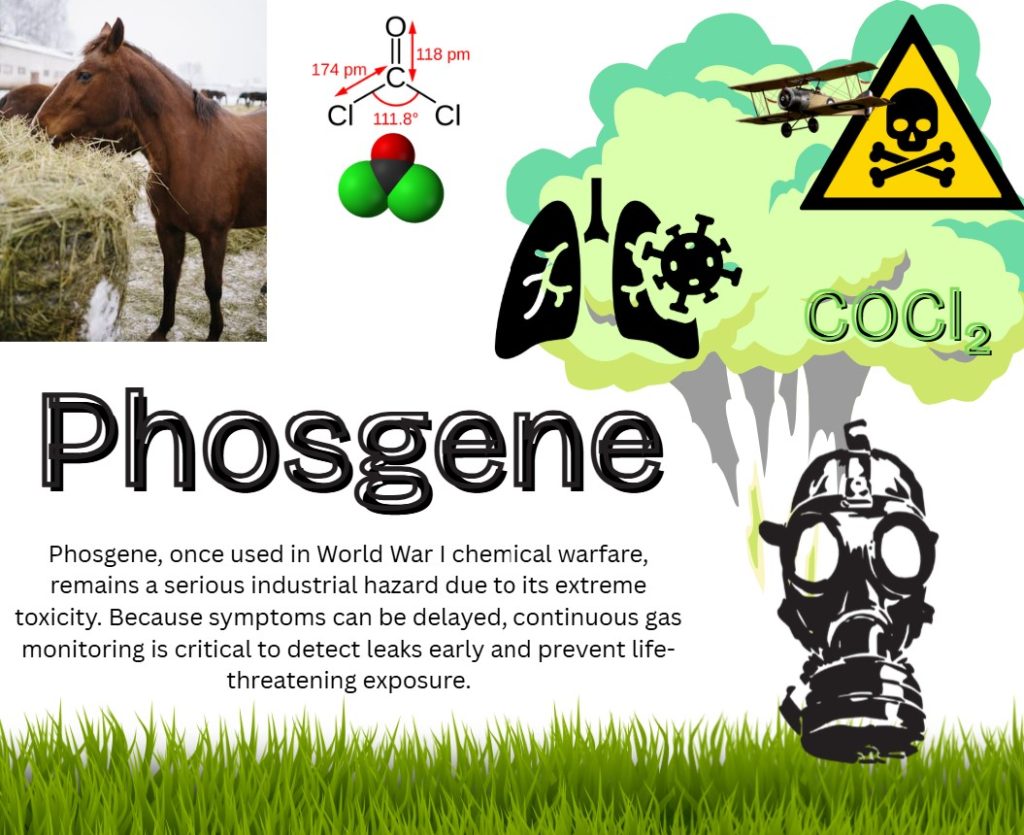
Phosgene (COCl₂) is a colorless, highly toxic industrial gas widely used in chemical manufacturing, including the production of plastics, pharmaceuticals, and pesticides. While it may have a faint odor similar to moldy hay or damp grass, relying on smell is dangerous — harmful levels can be present before the odor is detectable.
Historically, phosgene is known for its use as a chemical warfare agent during World War I, but today it remains a serious concern in industrial environments due to its toxicity and potential for accidental release.
Why We Should Care About Monitoring Phosgene
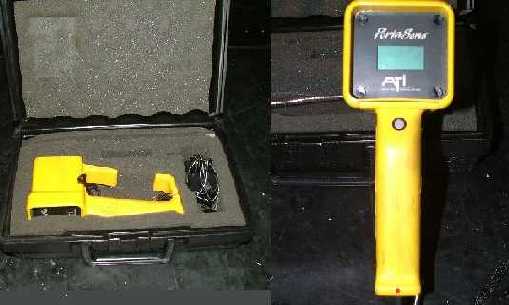
Phosgene exposure is especially dangerous because it may not cause immediate discomfort, allowing workers or animals to remain in contaminated areas unknowingly. Without proper monitoring, small leaks or process failures can quickly escalate into serious health emergencies. Continuous gas detection provides early warning, helping prevent exposure before conditions become life-threatening.
Threats to Humans and Animals
In humans, inhalation of phosgene can cause:
- Chest tightness and coughing
- Shortness of breath
- Severe lung irritation and pulmonary edema
- Long-term respiratory damage or death in high exposures
Animals are also highly vulnerable. Because of their smaller size and faster breathing rates, animals may show symptoms sooner and can serve as early indicators of dangerous concentrations in shared environments.


Staying Protected
Due to its toxicity and stealthy nature, phosgene requires reliable gas detection, proper ventilation, and strict safety protocols in any setting where it may be present. Monitoring isn’t just best practice — it’s essential for protecting people, animals, and operations from a potentially deadly hazard.

Interesting Facts About Phosgene
- Phosgene is heavier than air, meaning it can accumulate in low-lying or enclosed spaces.
- Symptoms of exposure are often delayed, sometimes appearing hours after inhalation.
- It is commonly produced unintentionally during the thermal breakdown of chlorinated solvents.
- Even brief exposure to relatively low concentrations can cause severe lung damage.
Allied soldiers pose for a picture while wearing their gas masks.

“It is estimated that as many as 85% of the 91,000 deaths attributed to poison gas in World War I were caused by phosgene or the similar agent diphosgene (trichloromethane chloroformate).” Compound Interest
“Another, more dangerous “irritant”, phosgene, was the main killer. But phosgene is slow to act – victims may not develop any symptoms for hours or even days.” https://www.bbc.com/news/magazine-31042472
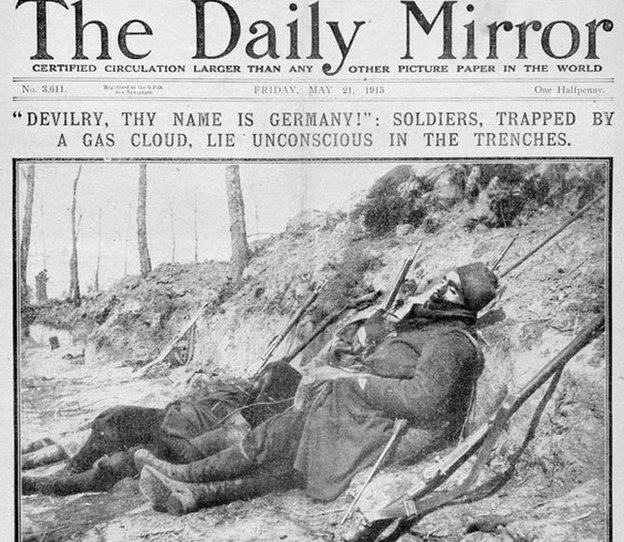
Front page of The Daily Mirror, showing British soldiers affected by gas during World War I (from the BBC article “The bitter legacy of World War One gas warfare,” originally published by BBC News Magazine). Image accessed from: BBC News, Magazine section, May 2015 — URL: https://www.bbc.com/news/magazine-31042472